



How Does NTC Temperature Sensor Improve Charging Safety of OBC On-board Charger?
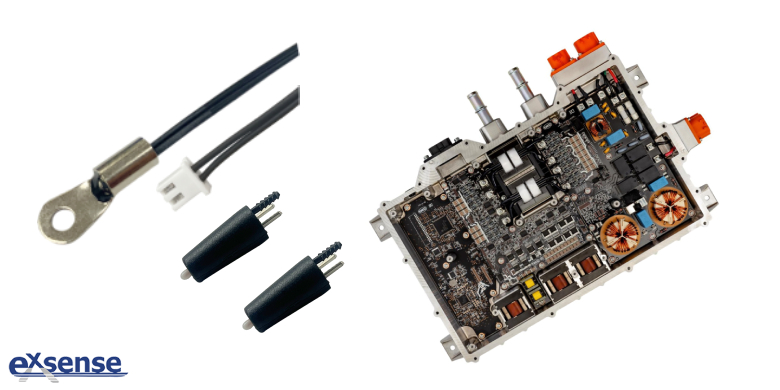
With the continuous increase in fast-charging power levels, the OBC on-board charger, as a key power conversion unit for energy transfer in EV, faces severe thermal management challenges during its operation. To effectively reduce the probability of thermal runaway in OBC on-board charger, temperature monitoring using EXSENSE excellent-reliability NTC temperature sensor is indispensable.
In the OBC on-board charger system, the core function of EXSENSE temperature sensors is to achieve real-time temperature sensing of key heat-generating nodes during charging. In high-temperature environments or during prolonged high-load charging, without timely temperature monitoring and control by NTC temperature sensors, the temperature of critical components inside the OBC can continuously rise, potentially causing issues such as the breakdown of switching transistors due to overheating or performance degradation and even burnout of electronic components on the control board. These failures can severely affect the use of new energy vehicles. With the assistance of NTC temperature sensors, the OBC can provide early warning of overheating risks and promptly adjust its operating state, ensuring stable operation and greatly enhancing the safety and reliability of vehicle charging:
1. High Reliability: The EXSENSE temperature sensor is manufactured in strict accordance with VDA6.3 audit standards and RoHS environmental requirements, and utilizes a special packaging process. It can withstand a wide operating temperature range of -40°C to 150°C, ensuring accurate temperature measurement even in high-temperature environments, reducing failure rates, extending OBC lifespan, and improving overall vehicle safety.
2. Customized Service: The internal space of the OBC is compact with uneven heat distribution, and major manufacturers have differing requirements for NTC temperature sensor parameters and sizes. EXSENSE supports customization, able to meet different OBC structural layouts, reduce integration difficulty, shorten development cycles, and improve product adaptability.
EXSENSE new energy vehicle NTC temperature sensors, with their high-sensitivity temperature monitoring capabilities, ensure the smooth and efficient operation of OBC on-board chargers. Based on real-time temperature feedback from EXSENSE temperature sensors, the OBC can adaptively adjust its operating state under different thermal conditions, avoiding forced derating due to overheating that would affect user experience, while also preventing accelerated component aging caused by long-term high-temperature operation, thereby improving overall OBC reliability. Furthermore, the temperature data provided by EXSENSE OBC on-board charger NTC temperature sensors allows the control system to intervene proactively before the OBC junction temperature approaches the critical point, highlighting the temperature protection function of the NTC temperature sensors.



 Email
Email EXSENSE Eva